Written by Alya Khairunnisa
“[My grandma] could go on about “those dirty Dutch people and their stinky buttocks,” everything about the Netherlands was wrong and everything about Indonesia was good. “Everybody was so beautiful, the Indonesians. Everyone is so hospitable.” That was drilled into me every time. But I did feel Dutch as well…”
- Vanja van der Leeden, author of Indorock
As an Indonesian living in the Netherlands, I feel out of place everywhere. Not only in Bekasi and Utrecht, but also with the communities that, on paper, I should be a part of – I am too European for the Indonesian Student Community, too Southeast-Asian for my Netherlands-born Indonesian and Dutch-Indonesian mixed friends – for instance. Stumbling upon Batik, Beats, & Bumbu, I thought it would move me to tears due to its exploration of those-in-between places and cultures that I identify myself with. Turns out, the internal conflict I feel everyday – the betrayal towards my ethnic heritage and my selfish need to pursue my dreams – is something left unexplored in the documentary.
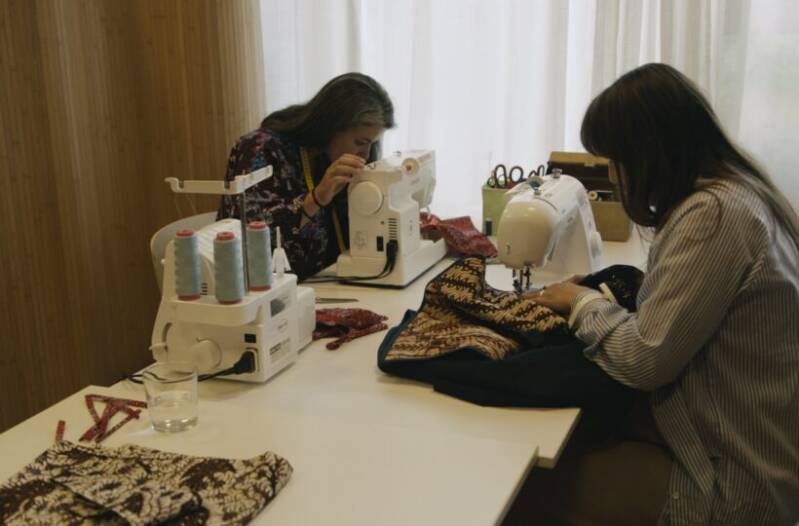
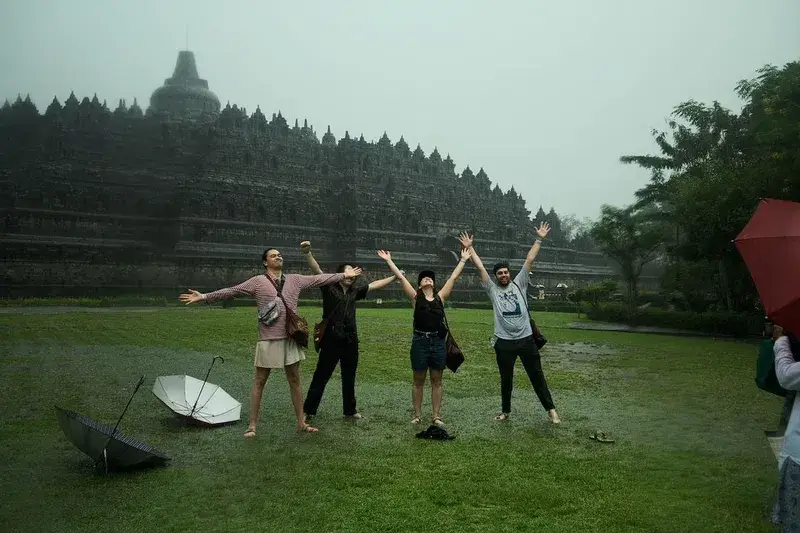
The premise is simple: it follows four different perspectives of Indonesian culture through the eyes of its diaspora. Batik (traditional Indonesian patterns in fabric) led by Guave; Beats led by Nusantara Beat and Jiwa Jiwa; alongside Bumbu (spice, seasoning) led by Vanja van der Leeden. Each point of view begins with a brief introduction of the lead(s)' ethnic background and what led them to their current artistic practice. The documentary drops the viewers in the middle of their respective projects, allowing them to tag along the work that they are currently doing – whether it is Nusantara Beat's visit to Borobudur Temple and one of their member's pursuit in finding his mother's old home, or van der Leeden's meeting with legendary Indonesian chef William Wongso and her exploration of a traditional pasar .
I had high expectations for this documentary; Dutch-Indonesian individuals' identities are deeply intertwined, rooted, and entrenched in colonial history. Many of its diaspora – including myself and those around me – have presented conflicting, well-informed, and increasingly critical views towards their heritage and the history that comes with it. Unfortunately, this documentary only presents a quarter of the criticality that I have seen. They have, on board, subjects that have shown ample evidence of both their love and exigency to address the inherent entanglement of the Netherlands and Indonesia; instead, they choose to focus on simplifying both the culture and history of both countries. I can only assume that this mode of storytelling is entertaining for those not familiar with Dutch-Indonesian traditional and contemporary culture, and incredibly unsatisfying for those that are.
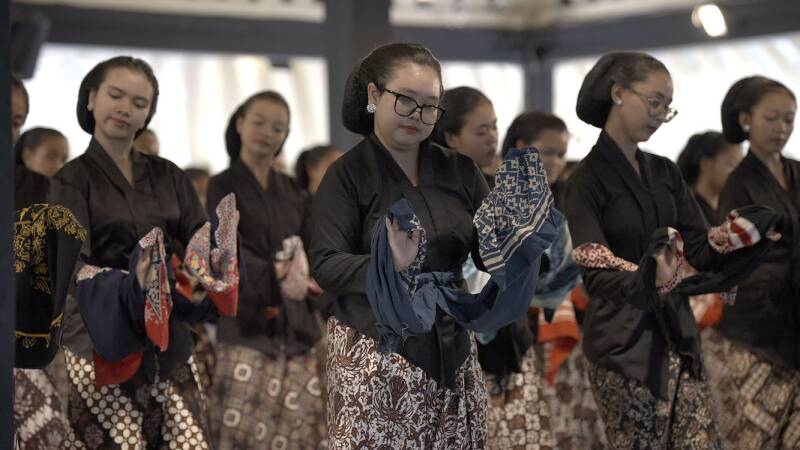
Let me be clear; I do not think the subjects of this film are 'performing' their Indonesian nationalism – but I do think the framing of the documentary presents itself as such. The subjects' determination to preserve the culture through combining modern and traditional means is evident of both their love for the culture as well as the research and self-reflection that they have done to create the work that they are proud to call their own. Yet, the documentary only touches upon the surface level discussion and does not delve deeper into how and why they have this much love for their craft – and their motivation to continue creating despite the dark history that haunts their heritage.
“I am also aware of the past, but I try to use it as a positive vehicle. I am aware of the colonization but I want to work with what Indonesia is right now [and] make new things but rooted in different cultures. It's good progress to be more open to exchanges like that”
- Michiel Sekan, DJ & Music director of Jiwa Jiwa
Discrepancy between my expectations and what the documentary aims to deliver always has the possibility to exist, of course; my main issue with the film lies within the (seeming) willingness of the subjects to express and talk about the internal conflicts that arose with the two contesting identities, yet they choose to only touch the surface of it. Performative nationalism, as I ascribe to this documentary, is especially that – to only showcase and explore the most common cultural aspects of a certain heritage as a whole representation of a country, without a critical eye to its history, development, and how it arrived to this point – to appease the foreign eye.
Let us also not forget the socio-political implications of this documentary; 350 years of Dutch colonization in Indonesia is deeply rooted in the artistic practices that are presented in the film. The Dutch attempted (and failed) to copy Batik and sold them to Indonesian citizens for financial gain. The Dutch denied language education to Indonesians, allowing only its elite to learn the Dutch language – thus created the Dutch-spoken Indonesian Beats of the olden days. Finally, may we always be reminded that Bumbu (or spice)– jahe, kunyit, lada, cengkeh, kayu manis – were the one of the main reasons for colonization in the first place.
Don't misinterpret me; there is, of course, space for feel-good films for topics as such. The documentary is not bad in any means; it is an interesting watch for those a part of the Dutch-Indonesian diaspora and a first step for those not a part of the community to understand our roots through art. Yet – perhaps due to my own background and affiliation with the matter at hand – I feel as if a documentary with this many subjects, support, and funding should have been able to explore more than it did. It packages Indonesian culture and history in a little box with a neat bow on top to appeal to the most eyes as possible, and in the process, simplifies what Dutch-Indonesians and the Indonesian diaspora in the Netherlands – like myself – actually experiences.
Add comment
Comments