The color orange, Marty Supreme jacket, Tyler the Creator, “Dream Big”, Timothée as EsDeeKid? What is Marty Supreme and why are these terms associated with a film about ping pong?
Written by Marí Arras

With a budget of $70M and renowned actors such as Gweneth Paltrow, Timothée Chalamet, Odessa A’zion, spectators approach the film with images of the color orange, America, something grand and monumental - words I would never have expected to associate with a film about a table tennis player. And yet, it was surprisingly so much more profound.
Directed by Josh Safdie, Marty Supreme is a film about a ping pong player in 1950’s United States, loosely based off of the life of Marty Reisman, an American champion in table tennis who played between the late 50’s and 90’s. The film revolves around the illusion of the American dream, through the lens of an extremely driven character who does everything to accomplish his desires.
The protagonist, Marty Mauser, is an egotistical, narcissistic character who is determined to become wealthy and famous by winning global table tennis competitions. As viewers, we don’t get a strong sense of Marty’s passion for the sport alone, but rather a strong drive for money, praise, and power. A compulsive liar and strategist, Marty uses everyone to get his way, and seems to care solely for himself. Despite all this, why do we find ourselves rooting for him?
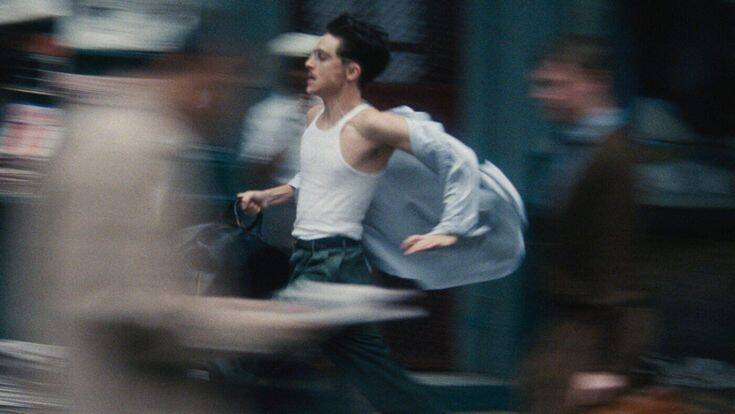
The film transports us to 1950’s New York City, with busy, dynamic scenes accompanied by loud and clamorous noises. It brings us to a world of post-WWII America, where scars show boldly yet life moves on at a fast pace. Mauser, of Jewish descent, often mentions his heritage as a humanizing aspect, to demonstrate that despite his scheming ways, he too had suffered hardship during the war, despite not mentioning any personal anecdotes.
The most striking image in the film is when Béla Kletzki, played by Géza Röhrig, recounts a story from his time in a concentration camp. The scene is set in a luxurious restaurant, where Marty and Béla having dinner after playing a match in the US Open table tennis competition. In this scene, Marty asks to cover the tab of the table Milton Rockwell (played by Kevin O’Leary) and his wife, Kay Stone (played by Gweneth Paltrow). This prompts Milton to come over and ask why he had done so, as they had never met previously. It is revealed that Marty’s intention was to impress Kay Stone, with whom he was about to commence an affair with. In order to distract her distressed husband, and steal a glance at Kay, he asks Béla to share his story at the concentration camp.
Béla begins recounting that he had been a table tennis champion in Europe, but during the war he was sent to a concentration camp. In the camp, his life was spared by a guard who recognized him due to his fame in the sport. Due to this recognition, he receives special treatment by being allowed off the grounds of the camp in order to aid by diffusing bombs in a nearby forest. He goes on to explain that one day in the forest, he followed a bee to its hive, smoked the bees out, and took the honey. He then snuck the honey into the camp by spreading it on his body, and at night, got his bunk mates to eat it off of him for nourishment in order to survive. This highly graphic, moving, yet disturbing image had a shocking effect, namely in its contrast with the setting of the luxurious restaurant. At first, I had not understood the purpose of this scene, yet it stayed with me days after watching the film. Upon further reflection, I deduced that this image served to contrast the effects of war on two people. The image of Béla having honey eaten off of his body resembled a religious painting, with him as the central figure, almost appearing worshiped. It was an image embodying an extreme act of sacrifice and selflessness. On the other hand, it presented Marty’s idolization of Béla for committing this great act that he views as heroism; an act praiseworthy and grand enough to distract Rockwell from Marty’s malicious intentions with his wife. Additionally, as both Marty and Béla are Jewish, it can be inferred that both underwent hardship, fear, and suffering during WWII, yet both men came out of this experience differently. Despite his extreme hardships, Béla continues to be selfless in acts such as letting Marty win against him, and not taking the competition too seriously. In contrast, Marty uses his Jewish heritage to compensate for his selfish actions, and to manipulate people using empathetic appeal.
All in all, the film presents a multifaceted character who is extremely narcissistic, but also illustrates the deep rooted drive for success and grandeur, one that secretly lives within each of us. The film screams “America” by reflecting on what life in 1950’s United States was for minority groups, the American Dream, and New York City’s fast-paced society. Marty Supreme depicts what life would be like to live selfishly and without regard to others except for your passions, which makes him a horrible person to others, but in a way, his incessant drive is almost inspiring. After all, doesn’t everybody want to rule the world?
Add comment
Comments
sooo goood!!!
loved it😍